Limuelle
The Deer KingLimuelle is a renowned physician from Otawalle whose work challenges the authority of Zol’s religious medical system. After he and his grandson Hohsalle cured Emperor Natalu’s wife when Zolian priest-doctors had considered her illness fatal, their medical knowledge became both a discreet source of hope and a publicly condemned heresy. Limuelle’s influence extends beyond that cure: he raised Hohsalle like a son, discovered the principle behind protection from some diseases, and remains an active clinician whose decisions shape the treatment of others.
Identity and Reputation
Limuelle is Hohsalle’s grandfather and a celebrated physician. His reputation precedes his arrival in person: Makokan recognizes him as the doctor who saved the Zolian emperor’s wife, a living figure of considerable renown. When Limuelle finally enters the room where Hohsalle is treating the boy Izam, Makokan sees a tall, elderly man with wavy gray hair, a calm expression, and a fierceness in his eyes. The meeting shifts the famous name from distant legend to a working physician at the bedside.
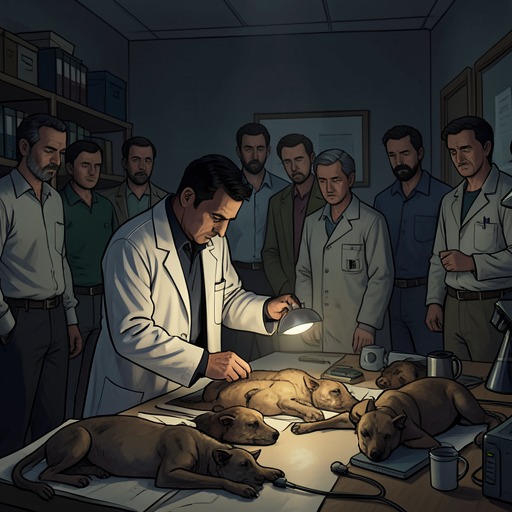
His professional standing is especially charged in Zol because medicine there is bound to religious authority. Zolians revere physicians as “the fingers of the god,” and doctors serve as priests of the Pure Heart Creed. When those priest-doctors judge an illness incurable, accepted practice is to leave the patient to divine care and provide only medicine intended to ease the end of life. Limuelle’s practice represents a different course: treatment can continue even when the official authorities have declared hope exhausted.
The Emperor’s Wife and the Medical Conflict
When Emperor Natalu’s beloved wife fell gravely ill, Natalu refused to accept the priest-doctors’ assessment as the final word. He had heard that Limuelle and Hohsalle had saved others with the same disease, and summoned them despite strong opposition from advisers who regarded Otawalle remedies as heretical. The two physicians cured the empress completely. The result was not merely a private recovery: it demonstrated, at the heart of the imperial household, that a condition deemed fatal by the established system might still be treatable.
Natalu asked Limuelle and Hohsalle to remain as palace physicians and teach their medical science to the priest-doctors. The doctors’ fury brought the association of priest-doctors into open conflict with the emperor. Limuelle and Hohsalle eventually declined the offer, and the immediate confrontation subsided, but their cure had already changed what the empire knew. News of Otawalle medicine reached the Zolian aristocracy; nobles privately sought its practitioners after being declared incurable by the priest-doctors.
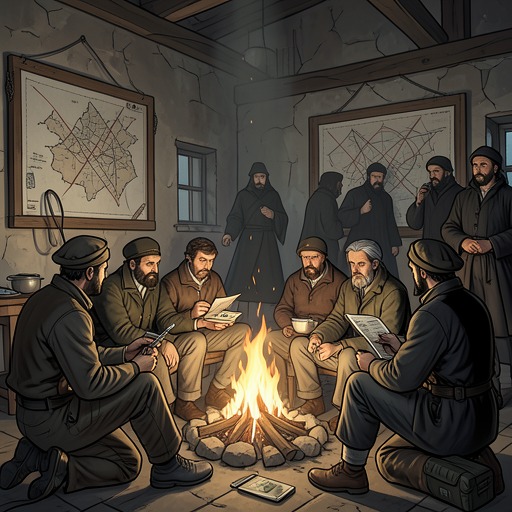
The political cost of this new hope was that it unsettled more than professional status. The Pure Heart Creed was understood as the bond holding the sprawling empire together, so neither emperor nor aristocracy could openly defy the priest-doctors without risking a wider challenge to religious order. A decade after the empress’s recovery, Otawalle medicine remained officially branded heresy, even as nobles continued to seek it covertly. Limuelle’s success thus survives in a divided form: publicly rejected, privately desired.
Teacher, Discoverer, and Healer
Limuelle’s influence is also carried forward through Hohsalle. He raised his grandson like a son and taught him medicine; Hohsalle’s later work develops a discovery Limuelle made about why some diseases are contracted only once. Limuelle identified the role of weakened disease agents and devised a way to introduce them into the body, allowing its defenses to recognize a particular illness. Hohsalle built on this insight by developing an injectable medicine. The family relationship is therefore also an intellectual lineage: Limuelle’s explanation becomes the groundwork for a treatment his grandson advances.
That principle links observation of illness to prevention. Hohsalle describes the body’s defenses as many kinds of “soldiers,” each with its own task, and explains that these defenses must learn to distinguish harmful agents from others. A weakened agent can act as a model of the enemy, giving the body a chance to recognize it before encountering the disease in full strength. The account does not present the treatment as effortless or without cost: introducing a foreign substance taxes the body. Limuelle’s discovery is important precisely because it turns earlier experience of disease into a deliberate means of preparing for it.
His knowledge also remains practical rather than merely historical. Limuelle treats the seriously ill eldest son of Malji, a connection that keeps his family close to the Molfah trackers. The relationship is intimate in the concrete sense that his grandfather’s care has helped keep Malji’s son alive. This medical bond persists across the political subjugation of Aquafa and the older ties between Otawalle and the trackers, showing that Limuelle’s practice operates through relationships that outlast changes in rule.
Clinical Judgment and Legacy
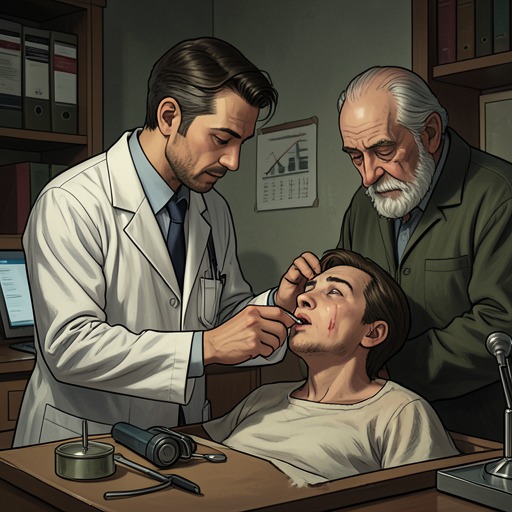
Limuelle’s appearance at Izam’s bedside makes clear that his authority rests not only on past achievement. After Hohsalle reports the boy’s condition, Limuelle examines his pupils by candlelight and asks whether convulsions have begun. He then proposes injecting Kokalu. Hohsalle is startled by the suggestion, indicating that Limuelle’s judgment is not simply a repetition of his grandson’s approach; even within their shared medical tradition, Limuelle can offer a course of action Hohsalle had not expected.
Limuelle’s legacy is therefore both institutional and personal. His cure of the empress exposed the limits of a system that treated an official declaration of incurability as the end of medicine, while his teaching gave Hohsalle a foundation for preventive treatment. Yet Limuelle’s work does not erase the difference between medical traditions. A priest-doctor, Mana, declines to look at the tiny organisms Hohsalle offers to show him, holding instead that the patient’s body reveals what must be understood and that care should remove the obstacles to living well. Limuelle’s achievement belongs to a contested exchange of knowledge, not a simple disappearance of older beliefs. He stands at its center as healer, teacher, and the grandfather whose discoveries continue through Hohsalle’s work.